
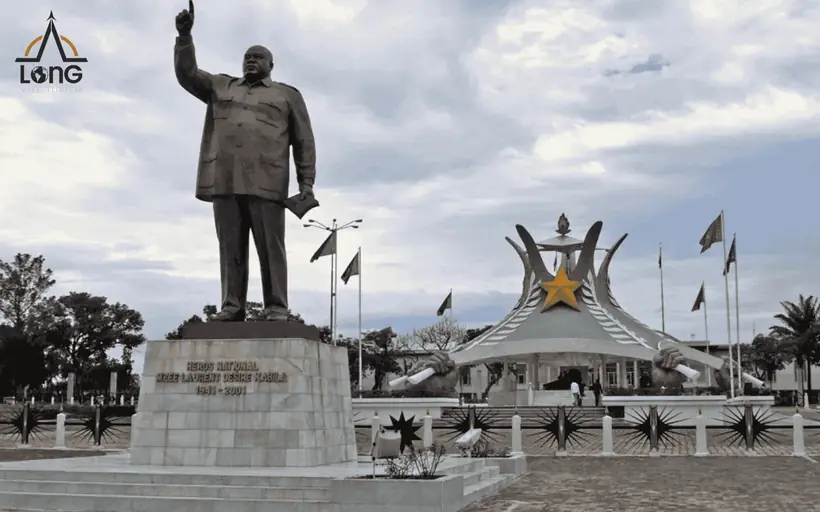
Kongo Demokratik Cumhuriyeti Vizesi
The Democratic Republic of the Congo is among the countries for which travel plans are made from Turkey due to its status as one of the largest countries in Central Africa, Kinshasa-based commercial connections, natural resource sectors, family visits, project-based business trips, and tourist routes. People who want to travel to this country must make the most important distinction correctly before starting the application: the Democratic Republic of the Congo and the Republic of the Congo are not the same country. Visa applications, document lists, diplomatic missions, and entry conditions may be evaluated differently for these two countries. Therefore, when preparing the file, it is important to clearly state the country name as “Democratic Republic of the Congo.”
People who will apply for a Democratic Republic of the Congo visa must clarify their purpose of travel, check their passport type, and plan the appointment and document process. The source text includes topics such as application location, making an appointment, consulate and embassy procedures, tourist, business, family visit, student, transit, and work-purpose visa types, average processing time, fees, and petition preparation. However, according to current official information, attention should be paid to passport exemption rules for Turkish citizens; while diplomatic passport holders may be exempt for certain periods, ordinary, special, and service passport holders are subject to a visa.
People who want to plan the application process can submit their purpose of travel, passport details, duration of stay, accommodation plan, and professional status information through the visa pre-application form and start the initial evaluation stage. This makes it clearer whether the applicant should prepare a tourist file, business file, invited visit file, or long-term stay file.
Country and Passport Checks Should Be Made First
The first mistake in Democratic Republic of the Congo applications is confusing the country name. Since the name “Congo” can be used in daily language for two different countries, the applicant must confirm whether the country they are traveling to is the Democratic Republic of the Congo or the Republic of the Congo. Cities such as Kinshasa, Lubumbashi, Goma, Kisangani, and Mbuji-Mayi are within the Democratic Republic of the Congo. Brazzaville, however, is the capital of a different country, the Republic of the Congo.
The second check is passport type. Although the source text includes exemption statements for some official passport types, current official visa practices for the Democratic Republic of the Congo state that diplomatic passport holders are exempt for 90 days within 180 days, while ordinary, special, and service passport holders are subject to a visa. Therefore, people with green or grey passports should also check the visa requirement separately before travel.
Roadmap Suitable for the Application
Application Profile Documents That Will Stand Out in the File Tourist travel Accommodation, transportation, financial documents, health insurance, and travel plan Business visit Invitation letter, company letter, professional documents, and meeting details Family or friend visit Invitation letter, information of the inviting person, accommodation, and explanation of relationship Education purpose Acceptance letter, student documents, financial support, and accommodation plan Work or long-term stay Employment relationship, official permits, long-term accommodation, and additional documentsThis table shows that the applicant should not apply the same document list to every visa type. Hotel and flight reservations that are sufficient for tourist travel may not be enough on their own for a business application. Likewise, a family visit file is not expected to appear strong without an invitation letter. The application file should be arranged according to the person’s actual reason for travel.
How to Obtain a Democratic Republic of the Congo Visa?
To obtain a Democratic Republic of the Congo visa, the purpose of travel is first determined. Then the passport validity is checked, the visa application form is completed, the visa request petition is prepared, a biometric photo is obtained, and flight and accommodation documents are arranged. Depending on the applicant’s professional status, documents for an employee, employer, student, retiree, or sponsored application are added to the file. For business, family visit, or education-purpose applications, invitation or acceptance documents obtained from the relevant institution or person must also be prepared.
The source text states that applications must be made by obtaining an appointment through the consulate or embassy visa department. The appointment process may vary depending on the application type, mission workload, and periodic practices. Before attending the appointment, the applicant should check all documents such as the form, petition, passport, photo, financial documents, insurance, reservations, and invitation letter.
Prepare the Documents as Modules Instead of a Single List
When preparing a Democratic Republic of the Congo visa file, it is more accurate to divide the documents into modules instead of collecting them in a single mixed list. The identity and passport module, travel purpose module, financial sufficiency module, accommodation and transportation module, and health and insurance module should be checked separately. This method reduces the risk of missing documents and helps the file appear more organized.
- Valid and undamaged passport
- Democratic Republic of the Congo visa application form
- Visa request petition
- Biometric photo
- Copy of Turkish ID card
- Round-trip flight ticket details
- Hotel reservation or document related to the address of stay
- Bank statement or financial sufficiency document
- SGK service record and workplace documents for employees
- Student certificate for students
- Comprehensive travel health insurance
- Invitation letter for invited applications
- Yellow fever vaccination certificate when required
The information in the documents must be consistent with one another. The name and surname in the passport must appear in the same way on the application form, petition, reservations, and insurance policy. Travel dates should not appear differently on the flight ticket, hotel reservation, and petition.
Passport, Health, and Entry Requirements
The passport must remain valid for a sufficient period after the end of travel. Although the source text mentions 3 months of validity in some sections, at least 6 months of validity is recommended in many entry practices for African countries. The passport should have been issued within the last 10 years, be readable, undamaged, and have blank pages. Applying with a worn passport or attempting to enter the country with a passport whose pages are damaged may create risk.
Health documents are also important for travel to the Democratic Republic of the Congo. A yellow fever vaccination certificate is one of the basic health documents that may be requested upon entry into the country. The name and surname information on the international vaccination card must match the passport, and the card must be kept with the traveler during the trip. In addition, depending on the region, it is useful to receive travel health advice for malaria, typhoid, hepatitis, and other health risks.
Tourist Travel File
The Democratic Republic of the Congo tourist visa is a file prepared by people who want to travel to the country for sightseeing, nature tourism, cultural exploration, or short-term personal travel. In a tourist application, it must be clearly shown that the trip is temporary. The applicant should explain between which dates they will be in the country, where they will stay, how they will cover their expenses, and that they will return to Turkey at the end of the trip.
In a tourist file, flight reservation, hotel reservation, travel health insurance, bank statement, and visa request petition stand out. The petition must clearly state the purpose of travel to the country. People who want general information about tourist applications can review the tourist visa page.
Business Travel File
The Democratic Republic of the Congo business visa is prepared for people who will travel for a business meeting, fair, company visit, contract negotiation, field visit, project meeting, or investment evaluation. The most important document in a business application is the invitation letter. The inviting company’s name, address, contact details, the invited person’s name, purpose of travel, and meeting dates must be written clearly.
An assignment letter prepared by the company in Turkey must also be added to the file. This letter should state the applicant’s duty, reason for travel, who will cover the expenses, and that the applicant will return to their job after the trip. Company documents, financial documents, and flight and accommodation plans should also be included in the business application file.
Family and Friend Visit File
For people who want to visit family members, relatives, or friends living in the Democratic Republic of the Congo, the invitation letter is one of the main documents of the file. The invitation letter must clearly state the inviting person’s identity information, address in the country, contact information, relationship with the applicant, and accommodation support. If the inviting person will cover the expenses, this must also be written separately.
The applicant must also submit their own documents. Work, education, family, or financial ties in Turkey should be visible in the file. Although the invitation letter is a strong supporting document, documents showing that the applicant will return to Turkey at the end of the trip are also important.
Education, Work, and Long-Term Plans
People who will travel to the Democratic Republic of the Congo for education, work, family reunification, or long-term stay should not apply with the logic of a short-term tourist file. For education applications, an acceptance letter, school letter, education program, accommodation details, and financial resources must be prepared. For work-purpose travel, documents showing the employment relationship and official permit process may be required.
For long-term stays, criminal record, health report, additional official permits, or institution letters may be requested. These types of applications are reviewed in more detail than short-term visits. Starting too close to the travel date may put the plan at risk due to additional document requests.
How Should the Visa Form and Petition Be Structured?
The visa form is the official information document of the application. Personal information, passport details, contact information, purpose of travel, duration of stay, professional status, and accommodation address must be written correctly on the form. Missing contact information, an incorrect passport number, or choosing the wrong visa type may cause the application to be delayed.
The visa request petition is the text that explains the information on the form. The petition should include the purpose of travel, entry and exit dates, address of stay, how expenses will be covered, and return plan. The petition should be short, formal, and consistent with the documents. For petition preparation, the petition samples page can be used.
Appointment, Processing Time, and Tracking
The source text states that the Democratic Republic of the Congo visa may be finalized on average within 5 to 10 business days. However, this period may vary depending on application workload, public holidays, additional document requests, the nature of the file, and the working order of the mission. After obtaining an appointment, the applicant must submit their documents completely and follow up on whether any additional documents are requested.
To avoid problems in the travel plan, it is recommended to start the application at least a few weeks in advance. For business, education, or long-term stay files, earlier preparation is safer. Submitting missing documents or making mistakes on the application form may extend the process.
Fee and Payment Plan
The Democratic Republic of the Congo visa fee may vary depending on the application type, duration of stay, number of entries, and periodic updates. Fees may not be the same for tourist, business, family visit, student, or work-purpose applications. In addition, consultancy, translation, insurance, courier, or additional service costs may arise.
Since visa fees are updated, exact fee information must be obtained before application. If the application is rejected, the paid fees may not be refunded. For current fees and application planning, support can be requested through the Long Visa contact page.
Checklist That Reduces the Risk of Rejection
- The country name must be correctly determined as the Democratic Republic of the Congo.
- The current visa requirement must be checked according to passport type.
- The passport must be undamaged and valid for a sufficient period.
- All information must be written completely on the application form.
- The petition must be prepared in accordance with the purpose of travel.
- Flight and accommodation documents must support the same dates.
- Financial documents must explain travel expenses.
- Invitation letters must be detailed for invited applications.
- The yellow fever vaccination card must be prepared before travel.
- Additional document requests must be followed regularly.
Brief Travel Notes About the Democratic Republic of the Congo
The capital of the Democratic Republic of the Congo is Kinshasa. The country’s currency is the Congolese Franc, and its official language is French. Lubumbashi, Goma, Kisangani, Mbuji-Mayi, and Kananga are among the prominent cities of the country. Virunga National Park, Lake Kivu, Mount Nyiragongo, and Kahuzi-Biéga National Park are shown among the notable travel points in the source text.
People traveling to the country should evaluate not only the visa process but also security, health, transportation, and accommodation conditions. Since the Democratic Republic of the Congo has a large geography, intercity travel, regional security conditions, and health precautions should be researched before the travel plan.
File Examples According to Application Scenarios
The first scenario is an employed applicant traveling alone. If this person will travel short-term to Kinshasa or around Goma for tourism, they should submit a workplace leave letter, SGK service record, salary slip, bank statement, hotel reservation, and return ticket together. If the petition states that annual leave is being used, that the trip is temporary, and that the applicant will continue working after return, the file becomes more understandable.
The second scenario is a person traveling on behalf of a company for a business meeting. In this application, passport and reservation alone should not be considered sufficient. The invitation letter sent by the company in the Democratic Republic of the Congo, the assignment letter from the company in Turkey, company documents, meeting dates, and which party will cover the expenses must be prepared clearly. If the applicant needs to travel frequently, the number of entries and visa duration request should also be clarified in the petition.
The third scenario is an invited family or friend visit application. The invitation letter must show the inviting person’s address in the country and their relationship with the applicant. If the inviting person will provide accommodation, this information must be written clearly; the applicant must also separately explain their return plan, work or family ties, and how they will cover travel expenses.
Narrative Consistency in the Application File
In Democratic Republic of the Congo applications, narrative consistency is as important as the number of documents. If “tourist travel” is selected on the form, a business meeting should not be described in the petition. If the invitation letter states 10 days of accommodation, the flight reservation should not be for 20 days. If the bank statement is submitted in the applicant’s name, the petition should not state that all expenses will be covered by someone else. Such seemingly small contradictions may lead to additional document requests or rejection risk.
While preparing the file, the applicant should look at each document with the question “Does this document support my purpose of travel?” Instead of documents that do not support the purpose, confuse the dates, or create unnecessary explanations, it may be better to create a simpler and stronger file. Especially people applying for the first time are advised to use a petition and document structure suitable for their own situation rather than a standard template.
Frequently Asked Questions
Is a Democratic Republic of the Congo visa mandatory?
According to current official information, ordinary, special, and service passport holders are subject to a visa. Diplomatic passport holders may be exempt from a visa for certain periods.
How many days does it take to get a Democratic Republic of the Congo visa?
The source text states an average range of 5 to 10 business days. Missing documents, public holidays, or an additional review process may extend this period.
Which documents are required for a tourist application?
Passport, application form, photo, petition, flight and hotel documents, financial documents, health insurance, and vaccination certificate when required should be prepared.
Is an invitation letter required for a business visa?
Yes. In business applications, an invitation letter from the company or institution in the Democratic Republic of the Congo is one of the important documents of the file.
Is an invitation letter sufficient for a family visit application?
The invitation letter is important but not sufficient on its own. The applicant’s financial situation, ties in Turkey, and return plan must also be shown in the file.
Is a yellow fever vaccination card required?
For the Democratic Republic of the Congo, a yellow fever vaccination certificate is among the important entry documents. Current health requirements should be checked before travel.
Is the visa fee fixed?
No. The fee may vary depending on the visa type, duration of stay, number of entries, and periodic updates. The current fee should be checked before application.